Author name: admin

Remember to review courses!

The 3rd period is over and we’d like to remind students to review all courses on KY’s Fringe Study Guide at ky.fi/voo. Below we have collected direct links to courses you might have taken!

Data Science for Business 1
https://ky.fi/voo/data-science-for-business-i-30e03000/
Capstone: Information systems development
https://ky.fi/voo/37c00200-information-systems-development/
Business Decisions 2
https://ky.fi/voo/30e02000-business-decisions-2/
Econometrics
https://ky.fi/voo/30c00200-econometrics-2/
Talousmatematiikan perusteet
https://ky.fi/voo/30a03000talousmatematiikan-perusteet/

Remember to review courses! Read More »

Management Information Systems -kurssille assistentti

Kanditason Management Information Systems (MIS) -kurssille on haussa assistentti ISM:n maisteriopiskelijoista! Kurssi alkaa 25.2.

Tehtävänä on ensisijaisesti tarkastaa osa kurssin harjoituksista (arviolta 4/8 harjoituksesta). Harjoitukset tulevat olemaan saman tyyppisiä kuin 2019 (nähtävillä https://mycourses.aalto.fi/course/view.php?id=20058&section=2). Osa tarkastuksista on esim. online-minikurssin sertifikaatin nopeaa tarkistusta, osa on tekstipohjaisten vastausten lukemista. Kurssille ilmoittautunee 90-130 opiskelijaa. Harjoitukset muodostavat 60% kurssin arvosanasta, ja niistä täytyy saada vähintään 30/60 pistettä kurssin läpäisemiseksi – suurin osa tekee kuitenkin kaikki harjoitukset, joten tarkistettavia harjoituksia tulee olemaan yhteensä n. 800-1000 kpl. Opettaja tarkistaa itse noin puolet näistä harjoituksista. Kaikki harjoitukset voidaan tarkastaa verkossa/etänä suoraan MyCoursesista.

Kurssista on samanaikaisesti kehitteillä myös online-versio syksylle, ja assistentti voi halutessaan auttaa myös tässä työssä – mm. monivalinta-quizzien laatiminen ja/tai lisääminen kevään 2019 Panopto-luentovideoihin (https://mycourses.aalto.fi/course/view.php?id=20058&section=1), sekä sähköisen arvioinnin valmistelu (Mycourses quizzit ja/tai sähköiset exam.aalto.fi tentit).

Kyseeseen voi myös tulla kaksi assistenttia, koska työstä maksetaan tuntityönä ja/tai suoritusperusteisesti (per arvioitava harjoitus).

Jos olet kiinnostunut tehtävästä, otathan pikaisesti yhteyttä!

Johanna Bragge / ISM
johanna.bragge@aalto.fi
0405301032

Management Information Systems -kurssille assistentti Read More »

Alumnus of ISM: Jani Kurki

Would you shortly introduce yourself?

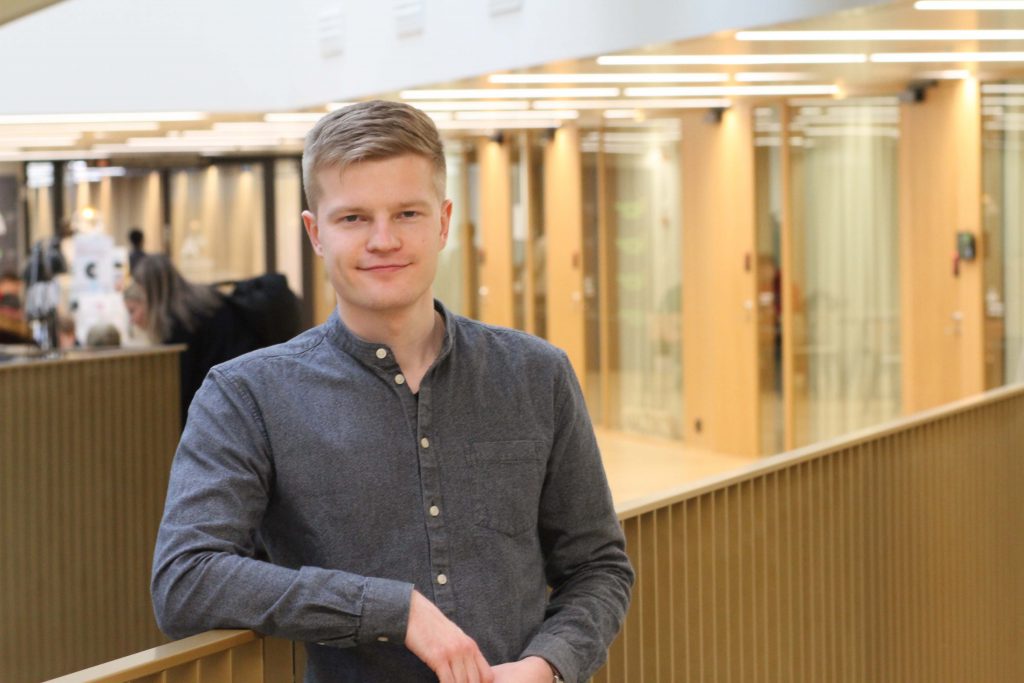
I’m Jani Kurki, a 26-year-old student at Aalto School of Business majoring in Information and Service Management (ISM) and minoring in Computer Science. Previously, I’ve been quite heavily involved at KY and Slush, and currently I’m writing my Master’s thesis on predictive modeling.

What made you choose ISM? What are you specializing in? 

Back in high school, I was wondering whether I should apply to law school or business school, as I was interested in social sciences rather than natural sciences. My interest in tech arose only later during my first year of studies, when I volunteered at Slush for the first time. I realized how technology is a driving force for development in society, but tech also needs business to reach its full potential and impact. I was excited to learn more and therefore ISM, at the intersection of business and tech, was a natural choice for me. I also like the forward-looking attitude of ISM, where studies adapt to new things quickly. For instance, no new technology is too early in its lifecycle to be studied in a thesis.

My specialization is a balance between Business Analytics and Information Systems Science, which provides a good mixture of both quantitative and qualitative skills.

I realized how technology is a driving force for development in society, but tech also needs business to reach its full potential and impact.

What skills have you learned in ISM that you find valuable?

I consider the role of many ISM students, including me, to be building and developing companies after graduation. Nowadays companies are increasingly data-driven businesses with lots of digital operations. This shift requires one to be able to both crunch their way through internal and external data for meaningful insights, and then act upon them in digital business context. The concrete analytical skill set as well as the wide understanding of digital business provided by ISM help one achieve it.

It is also worth noting that even though the technical background of ISM students is (naturally) not as strong as of technical students, it is still appreciated by various employers. For example, after my Bachelor’s studies I got elected to Huawei’s global flagship student program in China for hands-on training in ICT technologies. Technical students were the target group, but the contents of ISM studies convinced the company that I had what it takes to participate in the training.

How have you translated your acquired skills to your work life?

The skills have been highly beneficial in various places. While I was working as Junior Data Scientist at Supercell, my analytical skill set was fully in use, since my job was to analyze customers and some of the firm’s digital operations. The wider understanding of digital business has also been valuable. At a private equity firm, I was given the responsibility to screen through software companies and understand their business models and market dynamics in order to figure out if they would be good investments for the fund.

There have also been occasions when the combination of these skills was highly needed. In 2018, I worked at Slush and was responsible on our side for a joint project with the London-based venture capital firm Atomico. We created the State of European Tech report, which is the single, most comprehensive data-driven analysis of the European tech ecosystem. We crunched a massive pile of data and put it into the wider tech context for new insights. I also had the pleasure to spend quite a lot of time in London working with Atomico.

The skills are also applicable in non-digital context. The general understanding of business and analytics helped me a lot when I did an internship in the field of management consulting a couple of years ago. One rather surprising place, where I got to put analytical skills to good use, was the political campaign of a candidate who was running for the Finnish Parliament. I helped in making data-driven decisions for marketing and budgeting by analyzing publicly available data. Fortunately, he eventually got elected to the Parliament.

One rather surprising place, where I got to put analytical skills to good use, was the political campaign of a candidate who was running for the Finnish Parliament.

What has been your favourite course?

I have to mention two instead of one, so definitely both of the Data Science for Business courses! They introduce the most common algorithms for predictive modeling and through hands-on coding exercises students get to see what kinds of challenges can be tackled with them. Frankly, the courses were a lot of fun and professor Pekka Malo is just amazing. The courses inspired me to continue the topic in Master’s thesis as well.

What inspires you at the moment?

The dream of spring! The sun itself, of course, makes people happy and energized again after an exceptionally dark winter, but furthermore I’m graduating after I finish the Master’s thesis this spring. So, I’m going through a big life change, but I’m excited to see what the future holds.

What would you like to tell prospective or existing ISM students?

Even though ISM studies have given me a lot, most of the learning still occurs outside classroom. The studies give a solid basis to build on, but in order to turn learnings into practical skills, they need to be practised. I’d recommend being active in both work life and extracurricular activities during studies to achieve it.

The studies give a solid basis to build on, but in order to turn learnings into practical skills, they need to be practised.

Still, do things that actually give you joy. Enjoy life and experience new things. Don’t do anything because it is ‘expected of you’. Do things that excite you and make you happy and see where it takes you. Make the most of your student life, because it is over faster than you think.

Alumnus of ISM: Jani Kurki Read More »

Small Giant Games: (Jr.) Data Analyst, DL 10.02.2020

https://atalent.fi/open-position/jr-data-analyst?utm_source=btsm&utm_medium=email?utm_campaign=studo 

Type: Full-time
Preferred background: Flexible
Work hours: 38 hours per week
Starting date: Negotiable
Location: Kasarmikatu 42, 00130 Helsinki
Application deadline: 10.02.2020

Small Giant Games is one of the fastest-growing mobile game companies in the world. We believe that small, skilled and independent teams can accomplish gigantic things. Our brand new office is located right in the heart of downtown Helsinki and hosts our awesome, international team of 50 people. We bring years of experience to the table, with a crew of top players in game development, software engineering, and graphic design. We aim to give the players gaming experiences they simply won’t forget – filled with fabulous characters, rich animations, and beautiful graphics. And we always focus on friends, bringing the players social and multiplayer games they want to keep playing. Our latest game, Empires & Puzzles, has some of the best metrics in the industry, and it has already reached the top 10 grossing positions in over 100 countries.

We are currently looking for a smart and numerically savvy (Jr.) Data Analyst to join the ranks of Small Giant Games. As a (Jr.) Data Analyst, you will be a part of the core game development team and participate in the data analysis of the current mobile game selection – not to forget all the new upcoming titles. More specifically, you will work closely with designers, engineers as well as other team members, analyzing game data to validate the business impact of new features and identifying potential growth opportunities. You will also build compelling data stories to support your findings and drive further improvements through interactive data sheets and presentations. In addition, you will help plan A/B tests, analyze results and suggest the best plans of action for continuous improvement. All in all, your main focus is to make sure that the data collected, analyzed and visualized is of high quality and relevancy!

This is a unique opportunity for a (Jr.) Data Analyst with a positive “can-do” attitude to learn the secrets of data analysis of one of the most popular mobile games in the world. So, whether you’re enthusiastic, smart, and quick to learn, or you have years of relevant experience – we’d love to hear from you!

We hope you have at least the following qualities:

– Bachelors or Masters degree in Economics, Computer Science, Statistics or another related field
– Experience on querying complex data sets using SQL
– Experience in data visualization
– Familiarity with R and/or Python
– Interest in games, especially free-to-play mobile games
– Fluency in English

We consider as an asset:

– Relevant previous work experience

Small Giant Games offers you the following and much, much more:

– Exciting, fun and successful projects to work on
– Awesome amount of real live data to digest and analyze
– Extremely talented and helpful colleagues: this is a once in a lifetime learning opportunity!
– Lots of power and responsibility
– Office located conveniently in downtown Helsinki.
– Competitive salary and other benefits
– Relocation assistance as needed

In this position, you will be employed directly by Small Giant Games.
Do you have a razor-sharp mind and the ability to learn new things extremely quickly? Please submit your application letter and CV by the latest 10.02.2020 here: https://apply.atalent.fi/small-giant-games-jr-data-analyst-1-2020?utm_source=btsm&utm_medium=email?utm_campaign=studo. Please mention your salary request and possible starting date in your application documents. 
You can familiarize yourself with Small Giant Games here: https://www.smallgiantgames.com/. For more information about the recruitment process contact aTalent’s Recruitment Manager, Team Lead Mikaela Johansson (+358 50 351 2400, mikaela.johansson[at]atalent.fi).

Small Giant Games: (Jr.) Data Analyst, DL 10.02.2020 Read More »

Alumnus of ISM: Jesse Rajala

After finishing his Bachelor of Business Administration at Haaga-Helia University of Applied Science and working for a few years, Jesse Rajala realized he wanted to further his studies. He ended up choosing Information and service Management at Aalto University School of Business due to the reputation, location and great selection of courses. Now a fresh graduate of Information and Service Management, Jesse talks about his studies, and gives a few tips to students coming from a University of Applied science background.

  • Would you shortly introduce yourself?

I am Jesse Rajala, a 29-year old fresh graduate of the Master’s Programme in Information and Service Management from Aalto University and a Bachelor of Business Administration from Haaga-Helia University of Applied Sciences a few years prior. I began my master’s studies at Aalto Biz in 2017. 

  • Why did you decide Aalto for your studies?

After graduating from Haaga-Helia back in 2015, I acknowledged the possibility of continuing to a Master’s programme, but decided it was not worth it at the time. Eager to get into the working life, I thought I was ready to pursue my career ambitions in supply chain management and logistics. Working for a few years, I began to notice that my ambitions grew steadily and it became apparent that all the interesting open positions I found seemed to require a Master’s degree. Somewhere along the way I remembered that a Master’s degree was the end goal all along. The words of my mother to ‘maximise my potential’ and frequent debates with friends about the necessity of master’s degrees lingered in my head leaving me with only one option: getting that Master’s degree. Wanting to stay in the same field left me two viable options for a Master’s degree: ISM at Aalto Biz or Supply Management at LUT. I chose Aalto due to the reputation, location and great selection of courses.    

  • Did University studies differ from UAS studies?

In terms of course-work and lectures, the differences are noticeable. In UAS studies, courses and lectures were more intense with a strong practical approach and focus on building presentation skills whereas in university studies the lectures tended to be monologues by the lecturer or a guest lecturer with a few positive exceptions. Both studies included a lot of group projects. I didn’t feel that there was a significant increase in the difficulty of exams going from UAS to university courses. The key difference between UAS courses and university courses is that in university courses, the lecturer is not there to hold your hand and tell you what to do. While in UAS courses, where the lecturer acts more like a teacher and guides the learning process, at the university level, especially in the master’s-level courses, actually learning the course subject requires a lot of independent learning, self-guidance and active participation from the student. This is often learned the hard way, so this is probably my biggest takeaway to people coming to master’s studies from outside the university system.

Another significant difference between studying in a university compared to a university of applied sciences is the level of mathematical and analytical skills required to get by. This might depend on the study program, but coming from a bachelor program in business administration, I had to spend some time refreshing my more advanced high school math skills that I hadn’t used in over ten years. For UAS studies, basic math skills are enough, but university studies require a far more advanced maths skills. This caught me slightly off-guard, therefore I strongly recommend students starting their Master’s degree from a UAS background to take a few bachelor-level maths courses to start off. I know several people in my class who did just this, myself included, and it helps vastly. 


“ISM combines business and tech effectively, which is something companies really like right now and probably even more in the future.”

-Jesse Rajala, Graduate of ISM

  • What made you choose ISM? What did you specialize in?

I chose ISM as my Master’s degree program for its course offerings in supply chain management and logistics. Having worked and studied in the field, it was the perfect next step in my educational storyline. The idea of my master’s degree was to expand my knowledge on a very specific subject to become an expert of the field. Therefore, it was a logical choice to take the supply chain management track at ISM. The great thing about ISM that I learned is that even though the three tracks offered within the department at first seem irrelevant from each other, there is one underlying theme that links them together beautifully: data. After realising this, I began taking a few courses from the business analytics and information system science tracks to build a wider understanding into information and service management itself from courses across the track boundaries. I am really pleased with the end result. I gained more depth into my SCM knowledge while adding new valuable dimensions to my palette. ISM combines business and tech effectively, which is something companies really like right now and probably even more in the future.     

  • How have you translated your acquired skills to your work life?

Whether by luck or unconscious planning, I’ve noticed that I’ve managed to build my career path by expanding and utilizing my previous experience with surprising efficiency. In my current job as a business intelligence consultant, I am able to use my acquired skills, whether from school or work, to greatly benefit my work life. I strongly feel that choosing ISM as my Master’s degree major subject was a fantastic choice for my career, as it taught me valuable skills and has opened up doors I didn’t even realise existed. 


“I strongly feel that choosing ISM as my Master’s degree major subject was a fantastic choice for my career, as it taught me valuable skills and has opened up doors I didn’t even realise existed. “ 

-Jesse Rajala, Graduate of ISM

  • What has been your favourite course?

The most interesting course I took was Decision Making and Choice Behaviour and I recommend it for all ISM students. The course is a fantastic introduction into behavioural economics/psychology and is something every business school student should have at least a brief understanding of. The significance of this knowledge in actual business life can’t be emphasized enough. Product and Inventory Management was a great course that explored the mathematical modelling of inventory levels and yield management and taught me a lot. Lastly, my third pick for top course is Corporate Financial Management, and was part of my minor subject, finance. The course had an excellent lecturer, a challenging group project and provided a compact but thorough view into financial management. Yet again, something I believe every business student should know something about.   

  • What inspires you at the moment?

Finally getting closure on my educational goals, after years of ‘maybe, perhaps’, gives me the inspiration to be truly able to move on in life to focus my energy on my career and other aspects of life. Luckily I also found a perfect job during my Master’s studies, so I can delve straight into the working life, highly motivated and full of confidence in my decisions. Having already been full-time in the working life before, this time around the path is much clearer. 

  • What would you like to tell prospective or existing ISM students?

To prospective ISM students, especially those with UAS backgrounds: if you feel that you could have gone further with your studies to chase that career you really want, take the chance, I promise you will not regret the decision to apply to a Master’s degree. 

To existing students: do not forget to work on your soft skills, as usually those are the skills that get you places. Also, the ISM community is awesome, don’t be afraid to be a part of it. You might even end up finding job opportunities in surprising places. 

Alumnus of ISM: Jesse Rajala Read More »

Alumna of ISM: Katja Toropainen

The department of Information and Service Management is running stories about its students, and recently posted about Katja Toropainen, Founder of Inklusiiv and former Chief Curator at Slush. The story was originally published here.

  • Would you shortly introduction yourself?

Hey! I’m Katja Toropainen, Founder of Inklusiiv, former Chief Curator at Slush and a student at Aalto University. Earlier this year I founded Inklusiiv that has grown from a campaign to a community. Now we’re building a nonprofit organization with a mission to advance diversity and inclusion in work-life. I’ve also been writing my Master’s thesis on financial inclusion this year, and still need to finish that before it’s time to graduate.

  • Why did you choose Aalto for your studies?

I am really happy that I happened to find my way to Aalto University because it has allowed me to do multidisciplinary studies. When applying to Aalto School of Business, I did not know it was possible. Looking back now, it’s been one of the greatest experiences. I’ve gotten to study in diverse teams and do studies in Aalto Business, Arts and Science with students from different schools.

I’ve always struggled with deciding what to study or what career to choose and I had a really difficult time deciding my major. Nothing felt right. But the wide array of majors, minors and multidisciplinary studies offers a great possibility for way-too-curious people like me to study different things, learn, get a wider perspective of possibilities and in the end, through trial and error, find our dream careers.

  • What made you choose ISM? What are you specializing in?

After my bachelor’s degree, having volunteered at Slush, I was excited about getting to follow more of what’s happening in the intersection of business and tech. I feel it’s extremely important to have more people from different backgrounds who understand technologies and their impact on the world.

ISM as a major provides a wide category of very different subjects and courses and allowed me to do some courses at Aalto Uni School of Science as well.

  • How have you translated your acquired skills to your work life?

I’ve almost always worked part-time while studying. That work experience has essentially helped me figure out the existence of ISM as a possible major and also helped me to figure out what subjects to study. Studies have been much more beneficial after having work experience.

The most important skills acquired from studies have probably been thinking and prioritization. Thinking in terms of reading and learning a lot and being able to think and analyze things in a big picture and also in detail. Prioritization in terms of how to find the essential information fast, get things done and excel at different kind of projects.

Courses have included both academic readings and very practical case studies from real life, and I have enjoyed the combination.

  • What has been the best/your favourite course?

Working on my thesis! Because at ISM the array of thesis topics is wide. Almost whatever you’re interested in you can do a thesis about. I have got to choose my favourite topic: how new technologies can advance financial inclusion. I also get to work in a self-organizing manner and interview very interesting people for the thesis, such as technology entrepreneurs and researchers all around the world. I’ve always loved independence; deciding what to do, when and how. That’s the reason why I chose to study at a university, and probably why I’m also an entrepreneur currently.

  • How have you liked the new building? 

I have done most of my studies in Töölö. I’ve visited the new building a couple of times and it’s fantastic. I think the Otaniemi campus is spectacular and having all business, science and arts students there together can create real magic.

  • What direction are you looking to advance to / What inspires you at the moment?

For the past two years, I was in the leadership team of the startup and technology event Slush. My job as a Chief Curator was to follow the startup and technology industry globally, and our team was in charge of our content, program and speakers. I got to learn a ton and got curious about diversity and inclusion in tech.

This year in April, I started the inclusion movement Inklusiiv and challenged the fast-growing tech companies to report their diversity data, which led to 15 companies reporting their data for the first time. Now we’re building a nonprofit organization that advances knowledge and best practices about diversity and inclusion in the working life.

What inspires me always and all the time is learning! I’m happy that now, building Inklusiiv with our stellar, and diverse team, I get to learn all the time and do new things, building and creating something from scratch. I’m an optimist and believe in being able to change things for the better, so what keeps me inspired is the hope that we can make an impact.

  • What would you like to tell prospective or existing ISM students?

If you want to learn what’s happening in the business world, from technological development to the knowledge economy, ISM might be a great choice!

Alumna of ISM: Katja Toropainen Read More »

Alumna of ISM: Eleonora Nazander

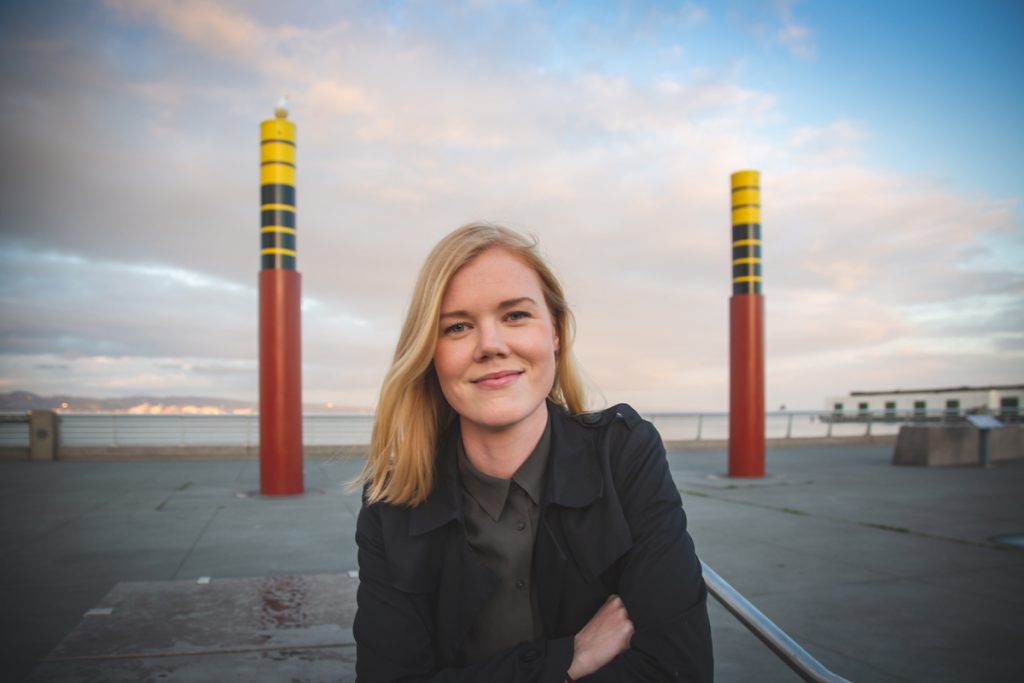
Eleonora Nazander, a graduate of Information and Service Management and a Senior specialist in Advanced Analytics at Bain & Company, talks about her career and gives some tips regarding ISM studies and looking for employment in Finland as an international student.

This story was originally published in Aalto News at:

https://www.aalto.fi/en/news/alumna-eleonora-nazander-analytical-methods-can-help-us-find-solutions-to-almost-any-problem

“In my opinion, the Information and Service Management program provides students a perfect mix of business and technical skills.”

Eleonora Nazander

Would you shortly introduce yourself?

I am Eleonora. I was born and raised in St. Petersburg, Russia. After finishing a bachelor’s degree in my hometown, I came to Finland to do a master’s degree in ISM. After graduation, I started working as a business intelligence analyst at Stora Enso. Stora Enso gave me a chance to participate in their global leadership trainee program, which included getting to know how to do business in China, as well as an international assignment in Brazil.

 After several years at Stora Enso, I made a switch into consulting by joining Bain & Co. Currently, I work as a Senior Specialist in Bain’s Advanced Analytics function in San Francisco. My areas of focus include customer segmentation, driver analysis, whitespace analysis, data visualization, etc. 

What made you choose ISM? What did you specialize in?

I was always interested in quantitative methods and wanted to use them to solve business problems. Information and Service Management was a perfect match, as it teaches you how to apply statistical methods to marketing, logistics and finance. In my opinion, the program provides students a perfect mix of business and technical skills.

 I specialized in the Business Analytics track, which resonated perfectly with my interests.

How have you translated your acquired skills to your work life?

My work is directly related to what was taught in ISM. To give you a few examples, the Database Marketing course gives a perfect background for working in customer analytics. It includes customer segmentation, in-market tests, predicting churn and Customer Lifetime Value (CLV) analysis. On another note, I did a lot of work in sales forecasting while still at Stora Enso. This is a rather complex issue well-covered in the Time Series Analysis course.

 I must say that the ISM master’s program was not the end of my studies. After graduation, I have been doing a lot of additional studies mostly through online courses on Coursera, DataCamp, Edx, etc. They were essential for strengthening coding skills in R, Python and SQL. Additionally, I was lucky to attend courses on leadership and business at IMD International Business School in Switzerland and Stanford Continuing Studies in the US.

What was your favourite course?

It was probably Simulation. It provided amazing intellectual challenges to be solved through the means of statistics. The course was undoubtedly difficult, yet each and every problem was fascinating. That’s when I realized what type of work I wanted to do in my career: complex intellectual problems requiring statistical methods.

 I would also like to mention one course I took as part of the minor in Finance. The Corporate Finance course is absolutely outstanding in how much essential knowledge about the functioning of a company it gives to students.

What direction are you looking to advance next?

In the future, I would like to apply statistical methods and data visualization for social impact problems. From climate change to poverty, there are just too many solvable issues in the world to stay indifferent. I strongly believe that analytical methods can help us find solutions to almost any problem.

What would you like to tell prospective or existing ISM students?

Be hungry. Learning can be an incredible joy, if you give yourself to it. Find what you are interested in and invest as much time as you can in becoming great at it. The modern world is very fast-paced and competitive, which means you will have to keep learning even after getting your diploma if you want to have a great career and impact.

Any tips for international students looking for employment in Finland?

From my personal experience, finding your first job can be very tough. I faced a lot of rejections, despite very good grades. Don’t give up! There are two pieces of advice I would like to give to those looking for jobs:

  1. Play on your strength. Identify your strengths and work on improving them even further. It is much harder to improve in the areas of your weakness, so, investments in strength will have greater payoffs. Remember, that everyone has weaknesses. Eliminating them will bring you to the average level, but will not make you an extraordinary candidate.
  2. Don’t think that good grades are enough. Most people find jobs through networking. Make sure to go to every company visit and career fair. Meet company representatives, ask them smart questions about their company and specific roles. Make them remember you. If you mention the encounter with company representatives in your motivational letter, it will make it easier for recruiters to relate to you.

Alumna of ISM: Eleonora Nazander Read More »